

Establishing a professional vet pet memorial program allows your practice to plant native trees as living tributes, replacing the administrative burden of sympathy cards with a lasting legacy. This system ensures every grieving client feels heard while your staff remains focused on clinical care. It provides a streamlined way to honour pets that aligns with the environmental values of modern Australian pet owners.
We know that saying goodbye to a long-term patient, like a 12-year-old Border Collie, leaves your team emotionally drained. Managing physical gifts and handwritten notes for 10 families a week is a heavy task that often leads to inconsistent follow-up. You want to acknowledge the bond between a family and their pet without adding to your clinic's daily stress.
This guide explains how to build a memorial process that improves client retention and supports your practice reputation. We provide the steps to adopt a living reforestation model that benefits both your clients and the Australian landscape.
Key Takeaways
- We help you establish a structured vet pet memorial program that ensures every client receives a consistent gesture of support.
- You can provide a lasting legacy through living tributes that remove the need for physical storage or inventory management in your clinic.
- We show you how to honour the bond with your clients by choosing sympathy gifts that support reforestation projects across Australia.
- You will learn how to bridge gaps in your current client follow-up and select a partner to handle the administration for you.
What defines a vet pet memorial program?
A vet pet memorial program is a structured framework that Australian veterinary clinics use to provide emotional support and remembrance for owners after a patient passes away. It organises the process of sending condolences, whether through sympathy cards, physical keepsakes, or living tributes like tree planting. This formal approach ensures that every client receives a consistent level of compassion, even during the busiest shifts in a high-volume practice. A well-managed program acts as a professional bridge between the clinical reality of end-of-life care and the long-term relationship you share with the pet owner.
The role of aftercare in modern veterinary medicine
Providing compassionate aftercare is a core part of modern practice that helps clients with understanding pet loss and grief. When a family loses a companion, the support they receive from their vet often determines their long-term loyalty to the clinic. Professional follow-up builds a layer of trust that goes beyond medical expertise. It shows that your team values the animal as a unique family member.
Having a clear system also protects your staff. Euthanasia takes a significant emotional toll on vets and nurses; the added pressure of remembering to send cards or organise gifts can lead to burnout. A structured program removes this administrative weight. It allows your team to express their sympathy without the stress of managing logistics.
Common types of memorial tributes
Clinics choose different ways to honour the memory of a pet, ranging from physical tokens to environmental contributions. Traditional options often involve tangible items like clay paw prints or small locks of fur placed in a decorative pouch. These provide immediate comfort. They do require staff time to prepare and physical space in the clinic to store supplies.
Digital memorials have become more common, offering owners a space to share photos and stories on a practice's website. This creates a community of support among your clients. Living memorials, such as planting a native tree in a reforestation project, offer a different path. These tributes focus on growth and continuity. They allow the pet's legacy to contribute to the Australian environment, which resonates with owners who value sustainability and want a gesture that lasts long after the initial period of mourning.
Essential components of an effective aftercare program
Consistency is the most important element of a successful vet pet memorial program. If your practice only sends condolences when the schedule is light, you risk alienating clients who feel forgotten during their hardest moments. We suggest using a system that triggers a response automatically after a patient record is closed. This reliability builds a reputation for empathy that extends beyond the consultation room.
You should ensure that the administrative time required from your nursing staff is kept to a minimum. Modern clinics often struggle with burnout, so your aftercare process must be efficient and easy to manage. High-quality materials reflect the professional standards of your veterinary care. A gesture that feels cheap or mass-produced can diminish the value of the bond you are trying to honour. Every tribute should feel personal to the specific pet, perhaps mentioning their name or a specific trait noted by the attending vet.
Timely communication and sympathy cards
Sending a sympathy card within 48 hours of a pet's passing shows genuine care. This window is critical because it reaches the owner while the loss is most acute. A personalised message from the vet who was present for the euthanasia carries significant emotional weight for the family.
Using a structured program ensures that no family is left behind during holiday periods or staff shortages. You can also provide links to grief support resources to offer practical help during the initial mourning period. This level of detail shows that your practice understands the depth of the human-animal bond.
Meaningful memorial gifts
Gifts serve as a lasting reminder of a pet's life and the care they received at your clinic. We recommend selecting items that do not require the owner to perform maintenance or cleaning. A grieving owner may struggle with daily tasks, so a gift that requires watering or dusting can become a source of stress. Avoid generic trinkets that might feel cluttered or insincere. A professional memorial should be a dignified tribute that stands on its own merits.
Our Vet Partnership Packages provide a way to offer these meaningful gestures without the need for physical inventory in your clinic. This approach allows you to support your clients while contributing to the restoration of the Australian landscape. By choosing a living tribute, you provide a sense of continuity that physical items cannot replicate.
Comparing living tributes with traditional memorial items
Living tributes offer a unique sense of continuity by directly contributing to the restoration of the Australian environment. While physical items like clay paw prints or locks of fur are often cherished, they require ongoing cleaning and permanent storage space in the home. Tree planting provides a way to honour a pet without adding to the physical clutter that can sometimes feel overwhelming during a time of loss. This approach specifically resonates with the 70% of Australians who prioritise sustainability when choosing services and products.
A structured vet pet memorial program that focuses on reforestation allows a pet's legacy to become part of a larger, living cycle. For a family who has just lost a 14-year-old Kelpie or a beloved Burmese cat, seeing a tribute that grows over time provides a quiet sense of hope. This focus on nature ensures the memory of the pet remains a positive and enduring presence in the world.
The benefits of reforestation memorials
Planting a native tree creates a permanent legacy that remains rooted in the Australian landscape for decades. These reforestation projects help restore local ecosystems by improving soil health and providing vital habitat for native wildlife. By supporting these projects, your practice contributes to the survival of local species like the Glossy Black Cockatoo or the Koala. A living memorial matures and changes with the seasons, mirroring the way a family's relationship with their pet's memory evolves over the years. You may also find it helpful to direct families to Grief Australia's Companion Animal Loss Support Group as they navigate this transition.
Operational advantages for the clinic
Choosing an outsourced vet pet memorial program removes the logistical burden from your frontline nursing team. Traditional keepsakes like ink paw prints require careful preparation and a dedicated cleaning station to manage the mess. Physical gifts also take up valuable cupboard space in the clinic while waiting for client collection, which can be a challenge for smaller practices in urban centres like Sydney or Melbourne.
- Outsourced programs require zero physical inventory or storage space in your clinic.
- Third-party providers handle the entire process of planting and sending notifications to the owner.
- Your team avoids the preparation time and clean-up associated with traditional clay or ink tokens.
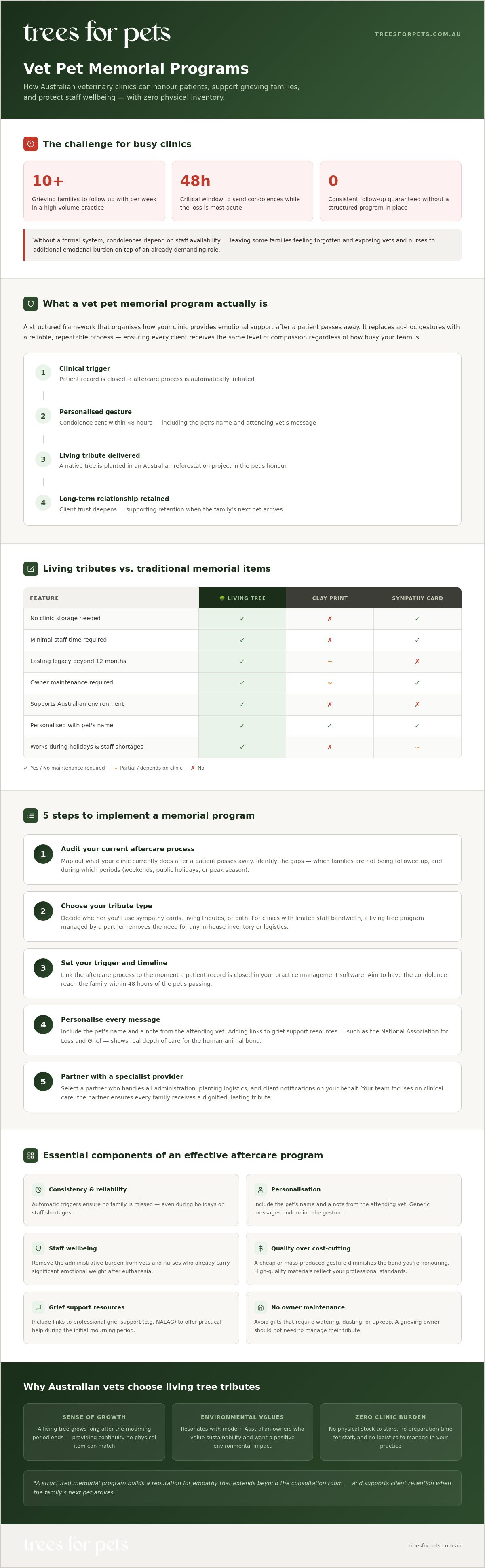
5 steps to implement a memorial program in your practice
Implementing a vet pet memorial program involves auditing your current aftercare and selecting a partner that manages the logistics for you. This transition allows your team to focus on clinical excellence—a priority for leading practices like West Gippsland Vet Care—while ensuring every grieving family receives a professional tribute. We recommend following these 5 steps to create a system that works for your clinic and your clients.
- Assess your current aftercare process. Identify where follow-ups are missed during busy weeks or holiday periods.
- Choose a memorial partner. Select a provider that understands the Australian context and manages reforestation projects within our local ecosystems.
- Train your team. Give nurses and receptionists the confidence to discuss the program with empathy during sensitive moments.
- Integrate the process into your software. Link the ordering system to your practice management software to save time.
- Review client feedback. Ask families if the memorial provided comfort during their initial period of loss.
Selecting the right memorial partner
The partner you choose reflects the values of your clinic. You should look for a provider that understands the specific needs of Australian veterinary practices, such as the high emotional load on staff. Ensure they offer professional notification cards or digital certificates that you feel proud to associate with your practice. Transparency is vital; a trustworthy partner provides clear information on where the trees are planted and how the reforestation projects are managed. You can learn more about implementing a pet memorial program in your vet clinic to see how these partnerships function.
Staff training and communication
Train your staff to introduce the program as a gift of remembrance from the practice. We suggest providing scripts that help team members find the right words when a client is saying goodbye to a 15-year-old Siamese or a working Kelpie. The conversation should focus on the positive legacy being created in the pet's name. All team members should understand the environmental impact of the chosen memorial. When a nurse can explain that a tree helps restore local habitat, it adds a layer of meaning to the gesture. This knowledge turns a standard follow-up into a profound act of stewardship.
If you are ready to simplify your aftercare, you can explore our Vet Partnership Packages to find a solution that fits your practice.
Why Australian vets choose Trees For Pets for client support
Trees For Pets provides a turn-key solution for busy Australian veterinary clinics that want to offer meaningful aftercare without increasing the daily workload of their team. We manage every aspect of the planting process, from selecting the reforestation site to notifying the grieving owner. By choosing our vet pet memorial program, you ensure that every client receives a consistent and professional tribute while your staff remains focused on clinical care, such as recommending Purrlys to support feline oral and digestive health.
Our program focuses on Australian reforestation, ensuring that the legacy of a patient has a local and meaningful impact on our environment. We partner with established reforestation projects to restore native ecosystems, providing vital habitat for local wildlife. This commitment to the earth resonates deeply with pet owners who view their companions as part of the natural world.
Streamlined vet partnership packages
Our packages are designed to fit the workflow of both solo practitioners and large hospital groups. We provide professional materials that enhance your brand reputation and show your commitment to the long-term well-being of the Australian landscape. Clinics save space by avoiding the need to store physical saplings or manage individual plaques in limited cupboard space.
This model reduces the administrative burden on your reception and nursing teams. You simply provide the details, and we take care of the rest. We provide sympathy gifts that are designed to be reverent and professionally presented. This focus on quality ensures the materials meet the high standards your clients expect from their veterinary team, strengthening your practice reputation as a compassionate care provider.
A living tribute that lasts
Every tree planted through our program contributes to restorative cycles in nature, helping to heal the Australian landscape after land clearing or bushfires. For a family mourning a 13-year-old Golden Retriever or a much-loved rescue cat, this gesture provides a sense of peace and continuity that lasts for decades. Owners receive a beautiful notification of the tribute created in their pet’s name, acknowledging the bond they shared. Each notification sent to the owner includes specific details about the planting, creating a tangible connection to the living legacy of their pet.
You can discover how memorial tree planting creates a living tribute for best friends to understand how this process helps families through their journey of loss. By offering a living memorial, you provide a gift that grows and matures, mirroring the enduring memory of the animals in your care. Integrating a vet pet memorial program into your clinic provides a space for contemplation and healing that benefits both the family and the earth.
Strengthening your practice through meaningful remembrance
A structured vet pet memorial program transforms the way your practice handles the sensitive period following a patient's death. Adopting a digital and nature-based model allows your team to provide consistent, professional support to every family. This approach ensures that the memory of a beloved companion contributes to the restoration of the Australian landscape, providing a living tribute that grows for generations.
We are trusted by leading Australian veterinary practices to manage the logistics of reforestation and client notification. Our team provides empathetic and professional support that reflects the high standards of your clinical care while supporting vital national reforestation projects. This transition simplifies your internal processes and creates a sense of continuity that doesn't rely on staff time.
Explore our Vet Partnership Packages for your practice. We look forward to helping you honour the enduring bond between people and their pets.
Frequently asked questions
What is a vet pet memorial program?
A vet pet memorial program is a structured system that clinics use to provide emotional support and remembrance for owners after a pet passes away. This usually involves sending sympathy cards or living tributes like memorial trees. It ensures every family receives a consistent gesture of care regardless of how busy the clinic staff are on a particular shift.
How do living memorials compare to traditional pet aftercare?
Living memorials focus on growth and environmental restoration rather than physical keepsakes. Traditional aftercare often involves items like paw prints or fur clippings which require permanent storage and cleaning. Reforestation offers a clutter-free way to honour a pet's legacy while contributing to local Australian ecosystems and supporting native wildlife habitats.
Can a memorial program help reduce staff burnout in vet clinics?
Yes, a vet pet memorial program reduces the emotional and administrative burden on your team by automating the condolence process. Vets and nurses often feel guilty if they forget to send a card during a busy week. Our system handles these logistics for you, allowing staff to focus on clinical excellence without the stress of managing physical gifts.
What is included in the Trees For Pets vet partnership?
Our partnership includes managed tree planting in Australian reforestation projects and professional notification materials for your clients. We provide custom certificates or cards that reflect your practice branding and professional standards. You receive a turn-key system that handles all logistics from the actual planting to the final owner notification.
How do clients find out a tree has been planted for their pet?
Clients receive a professional notification card or a digital certificate acknowledging the tribute created in their pet's name. This material includes specific details about the reforestation project and the animal being honoured. It provides a tangible connection to the living legacy your practice has established, offering comfort during the initial stages of grief.
Does the clinic need to store any physical products for the program?
No, our program requires zero physical inventory or storage space in your practice. We handle the planting and the delivery of all notification materials through our managed service. This is a significant benefit for urban clinics with limited space who still want to offer high-quality, professional sympathy gifts to their clients.
How long does it take to set up a memorial program in a clinic?
Setting up a formal program typically takes less than 7 days once you have selected your partnership package. We provide the necessary training materials and integration steps to ensure a smooth launch for your team. Your practice can begin honouring patients with living tributes almost immediately after the initial account is established.
Why is reforestation a popular choice for pet memorials in Australia?
Reforestation resonates with Australians because it helps repair local habitats affected by land clearing or bushfires. Many owners prefer a living tribute that matures and changes with the seasons over a static physical object. It aligns with modern environmental values and provides a sense of hope through the natural restorative cycles of the Australian bush.


