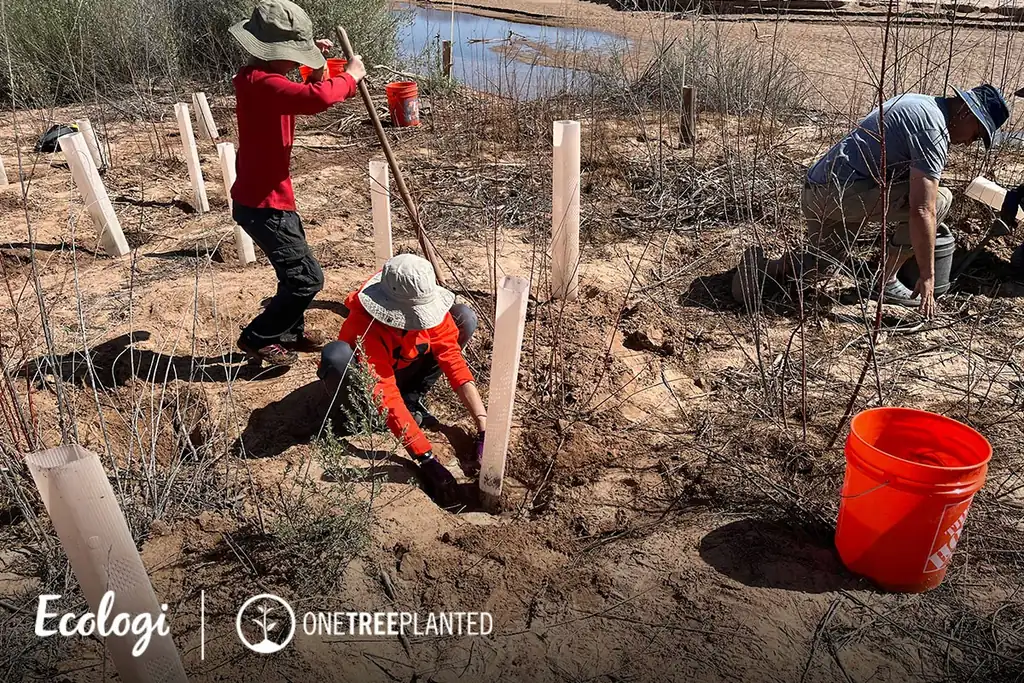
Planting complete · United States

Restoring riparian habitat in Southwest USA

The project focuses on removing invasive plants, particularly tamarisk, and establishing native riparian species to stabilise streambanks, reduce erosion, and enhance water quality.

Restoring riparian habitat in Southwest USA, photograph 1 of 5
Our trees here
49
Planted
March 2026
Planted through
Ecologi

About the site

Ecologi is supporting the planting of this restoration initiative to address the critical riparian habitat degradation across Nevada and Arizona river systems, where a century of cattle grazing and invasive species proliferation has severely impacted native vegetation. The project focuses on removing invasive plants, particularly tamarisk, and establishing native riparian species to stabilise streambanks, reduce erosion, and enhance water quality. Special emphasis is placed on restoring screwbean mesquite trees, which face region-wide decline and potential endangered species listing, alongside other native species like coyote willow and large ash and cottonwood trees that provide essential habitat for endangered birds such as the southwestern willow flycatcher and yellow-billed cuckoo.

The project's collaborative approach brings together federal agencies, landowners, non-profits, and two tribal nations to create a large-scale regional impact. By providing project development resources and plant materials to landowners who typically lack funding for such comprehensive work, the initiative expands both the acreage and complexity of riparian corridors. Community engagement is central to the effort, incorporating volunteer events and educational programs for local school-aged children to foster understanding of riparian ecosystem importance. The tribal partnership component specifically builds long-term capacity by training and supporting the sustainability of tribal conservation and forestry programs, ensuring the project's benefits extend well beyond immediate restoration outcomes to create lasting ecological and economic resilience throughout the region.

Project notes from Ecologi, our planting partner for this site.

Restoring riparian habitat in Southwest USA

United States

What the trees do here

For people

The project supports local landowners, tribal nations, and communities by providing resources, training, and funding that are often unavailable for large-scale restoration. It creates educational and volunteer opportunities that build local stewardship and environmental awareness, especially for school-aged children. By strengthening tribal conservation and forestry programs, the initiative also supports long-term economic resilience, workforce skills, and community-led land management.

For nature

This project restores degraded river ecosystems across Nevada and Arizona. Native trees such as screwbean mesquite, willow, ash, and cottonwood stabilise streambanks, improve water quality, and rebuild critical habitat. This directly benefits threatened and endangered wildlife, including the southwestern willow flycatcher and yellow-billed cuckoo, while supporting broader biodiversity across riparian corridors.

For the climate

Healthy riparian ecosystems store carbon in soils and vegetation, helping to mitigate climate change. Restored streambanks reduce erosion and improve water retention, increasing ecosystem resilience to droughts and extreme weather. By establishing diverse, native plant communities adapted to local conditions, the project strengthens the landscape’s ability to withstand climate stress while delivering long-term, nature-based climate solutions.

Goals it reports against

  • Goal 3 Good health and well-beingBy improving riparian vegetation and water quality, the project supports healthier ecosystems that reduce erosion, dust, and water contamination risks, contributing to improved environmental conditions for surrounding communities.
  • Goal 4 Quality educationThe project integrates education through volunteer events and school programs, building ecological literacy and fostering long-term stewardship of riparian ecosystems among local youth
  • Goal 6 Clean water and sanitationRestoring native riparian vegetation stabilises streambanks, reduces sediment runoff, and improves water quality across Nevada and Arizona river systems, strengthening the resilience and function of freshwater resources.
  • Goal 13 Climate actionBy restoring native riparian forests and removing invasive species, the project enhances carbon sequestration, increases climate resilience of river systems, and supports adaptive land management in the face of increasing drought and extreme weather.
  • Goal 15 Life on landThe initiative protects and restores critical riparian habitats by removing invasive species and re-establishing native plants, safeguarding biodiversity and providing essential habitats.

Growing here for

The most recent of the 49 trees planted here for somebody's pet.

Planting has finished here

Every tree on this site still stands and still has its page. New trees go to the sites we plant now.